
How We Test Best Home Office Computer Desk UK
At Best Home Office Computer Desk UK, we don’t recommend desks based on spec sheets, brand reputation, or quick impressions. Everything we publish comes from real, first-hand use in an actual home office environment. We created this site because we’ve personally experienced how the wrong desk can cause discomfort, poor posture, and long-term fatigue during long working hours.
Before writing a single word, we make sure the desk has been unboxed, assembled, and used by us, just like any regular customer in the UK would. We test desks during real workdays—typing for hours, managing dual-monitor setups, supporting heavy desktop PCs, and, where applicable, switching between sitting and standing. These aren’t short tests done in a showroom or a warehouse. We spend days and often weeks working on each desk to understand how it actually performs over time.
Our goal is simple: to help people choose a desk that genuinely fits their working style, body comfort, and home space. Many desks look good online but feel very different after long use. That’s why we focus on how a desk feels at the end of a long day, not just how it looks in photos.
We also believe trust comes from honesty. If a desk has weaknesses—whether it’s stability, surface durability, or limited adjustability—we say so clearly. We don’t recommend products just because they are popular or well-known. If we wouldn’t use a desk ourselves for long working hours, we won’t suggest it to our readers.
Every test, comparison, and recommendation on this site is driven by real experience, practical knowledge, and honest judgment, so readers can make confident decisions without second-guessing their purchase.
Our First-Hand Experience
When we say we test desks first-hand, we mean exactly that. Every desk we review is physically handled, assembled, and used by us, not judged from images or manufacturer descriptions. We start at the same point any buyer does—delivery. We check how the desk arrives, whether the packaging protects the panels properly, and if anything shows damage straight out of the box. These small details matter, especially for larger desks that are difficult to return once assembled.
Assembly is done without shortcuts. We follow the included instructions, use the tools provided, and note how clear or confusing the process is. Some desks claim “easy assembly,” but the reality can be very different. We pay attention to alignment issues, missing parts, and how long it actually takes to get the desk ready for use.
Once assembled, the desk becomes part of our daily workspace. We don’t sit on it for an hour and move on. We work on these desks for several days and often weeks, using them for long typing sessions, video calls, writing, and general desk work. This is where real issues start to show—minor wobble, sharp edges, uncomfortable heights, or surfaces that don’t feel durable after repeated use.
We also test desks with real equipment: monitors, monitor arms, laptops, keyboards, and heavier desktop setups. If a desk struggles under normal working weight, it becomes obvious very quickly. Sit-stand desks are raised and lowered repeatedly to check smoothness, noise, and consistency.
By the time we publish a review, we’ve lived with the desk long enough to understand its strengths and weaknesses. Our opinions come from daily use, not assumptions, so readers know exactly what to expect before spending their money.
Real-World Usage Testing
After assembly, each desk is tested in the way it is actually meant to be used—as part of a real home office, not a staged setup. We place the desk in our everyday workspace and work on it for long, uninterrupted hours, just like anyone working from home in the UK. This allows us to see how the desk performs when comfort, focus, and posture really matter.
We use the desks for regular tasks such as typing, writing, browsing, and video calls. Many desks feel fine at first, but small problems often appear after a few hours. We pay close attention to how stable the desk feels while typing, whether there is any wobble when leaning on the surface, and how solid it remains throughout the day. If the desk distracts us during work, that’s a clear sign something isn’t right.
For desks that claim to support heavier setups, we test them with dual monitors, monitor arms, and desktop PCs. This helps us understand how well the desk handles real working weight, not just what the specifications promise. We also observe how the surface holds up—whether it scratches easily, shows fingerprints, or feels uncomfortable during extended use.
If the desk is height-adjustable or a sit-stand model, we use it in both positions repeatedly. We check how smooth the height transitions feel, how noisy the motor is, and whether the desk stays stable at higher positions. Standing desks are used for full standing work sessions, not just quick tests.
By using each desk throughout normal workdays, we get a genuine feel for how it performs over time. This real-world testing helps us identify practical strengths and everyday frustrations that only appear after hours of use, giving readers an honest picture of what living with the desk is actually like.
Ergonomic Evaluation
Ergonomics is one of the main reasons we test home office desks so thoroughly. A desk might look solid and well-built, but if it doesn’t support good posture, it can quickly become uncomfortable during long working hours. When evaluating ergonomics, we focus on how the desk feels during real use, not just whether it meets basic size measurements.
We start by checking desk height in relation to seating position. We sit at the desk for extended periods and pay attention to shoulder tension, wrist angle, and arm positioning while typing. If a desk is too high or too low, discomfort becomes noticeable after a few hours, and we make note of that. For adjustable desks, we test the full height range to see if it genuinely suits different body heights rather than just claiming to.
Legroom is another key factor. We look at how much space there is under the desk, whether the frame or support bars interfere with knee movement, and how comfortable it feels when shifting position throughout the day. Desks that feel restrictive quickly become tiring to use, especially during long sessions.
We also test how well the desk works with ergonomic chairs, footrests, and monitor arms. A good desk should fit naturally into an ergonomic setup without forcing awkward adjustments. For sit-stand desks, we evaluate how comfortable the standing position feels over time, including whether the desk height allows a relaxed posture without leaning or hunching.
Rather than relying on theory alone, our ergonomic assessment is based on hours of real sitting and standing. If we feel less fatigue, better posture, and improved comfort by the end of the day, the desk scores well. If discomfort builds up over time, we report it honestly. This approach helps readers choose a desk that truly supports healthy, long-term home working.
Build Quality & Materials Assessment
Build quality is one of those things that often looks good on paper but tells a very different story once the desk is in daily use. When we assess materials and construction, we rely on hands-on handling and long-term use, not marketing descriptions. From the moment we lift the panels out of the box, we get a sense of how solid the desk really is.
We check the thickness and finish of the desktop, running our hands across the surface to feel for rough edges, weak coatings, or hollow-sounding boards. During everyday work, we observe how the surface reacts to constant contact—keyboard movement, mouse use, coffee mugs, and general wear. Some desks mark or scratch easily, and those issues usually appear within the first few days.
The frame and legs are examined closely during assembly and daily use. We pay attention to metal thickness, weld quality, and how well everything locks together once tightened. A desk that flexes or shifts slightly may not seem like a big problem at first, but over time it can affect stability and comfort. We also test how well the desk holds weight by placing real equipment on it rather than relying on stated weight limits.
Over days and weeks, we watch for signs of loosening joints, creaking sounds, or sagging surfaces. These are the kinds of problems that don’t show up in quick tests but matter a lot in real life. For adjustable desks, we also observe how the frame holds up after repeated height changes.
Our goal is to understand how the desk ages with normal use. If it still feels solid and dependable after extended testing, that earns our confidence. If build issues appear early, we highlight them honestly so readers know exactly what to expect before buying.
Comparison & Benchmark Testing
We don’t test desks in isolation. To understand whether a desk truly offers good value, we compare it directly with other desks we have personally tested, especially those in a similar price range. This side-by-side approach helps us move beyond first impressions and see where a desk genuinely stands in the real world.
When comparing desks, we look at how each one feels during long working hours. We switch between desks for similar tasks—typing, writing, and general desk work—to notice differences in comfort, stability, and overall usability. Small details often become obvious during these comparisons, such as how much a desk moves while typing or how solid it feels when leaning on the surface.
We also compare build quality and materials by checking desktop thickness, frame strength, and overall finish. Two desks might look similar online, but once assembled, differences in sturdiness and craftsmanship can be very clear. Sit-stand desks are benchmarked against each other by testing height range, smoothness of movement, and stability at standing height.
Price plays a big role in our comparisons. A more expensive desk should clearly offer something extra—better materials, improved ergonomics, or stronger stability. If a budget desk performs surprisingly well, we highlight that too. Our goal is not to push the most expensive option but to identify which desk makes the most sense for the money.
Because we focus on desks available in the UK, we also factor in delivery experience, warranty terms, and after-sales support when relevant. These practical details often influence long-term satisfaction.
By comparing desks we’ve actually used, we can confidently say where one desk excels and where another falls short. This benchmark testing allows us to give clear, honest recommendations based on real experience, helping readers choose the desk that best fits their needs and budget.
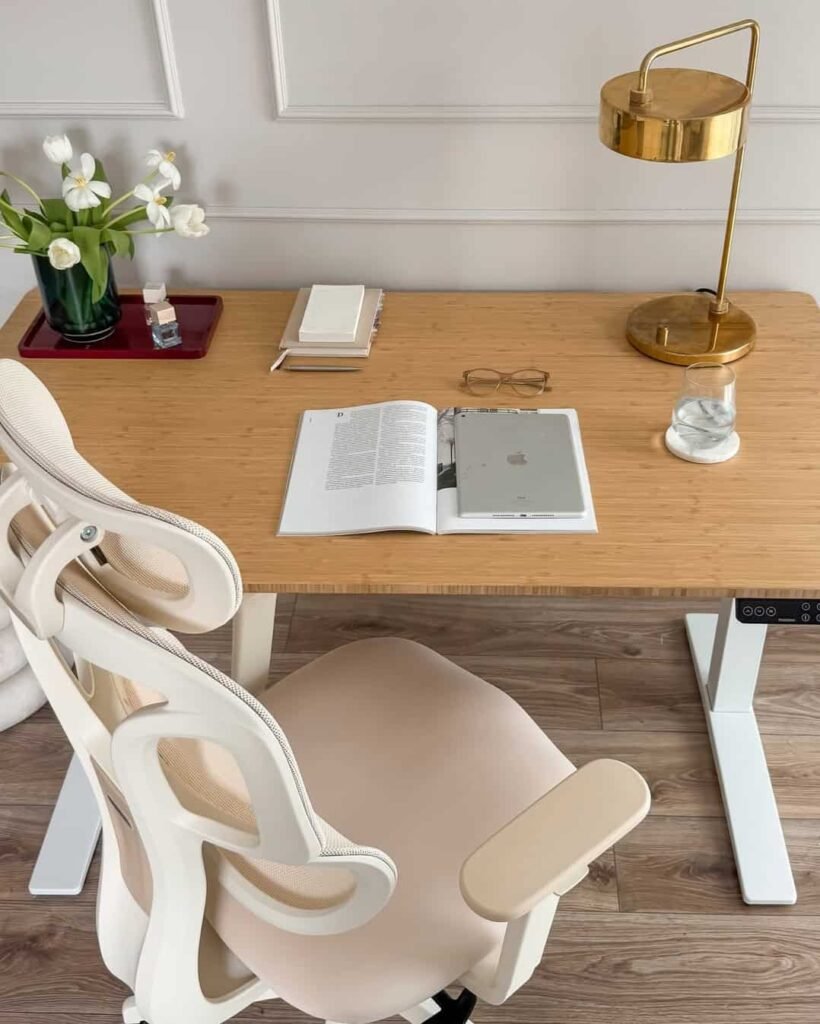
Example
To give readers a clearer picture, we score each desk only after hands-on testing and direct comparison with similar desks we’ve already used. These scores are not based on specs alone—they reflect how the desk actually performs during long workdays.
Desk Tested
FlexiSpot E7 Pro Plus Standing Desk (UK Model)
Stability (Score: 9/10)
During daily typing and standing sessions, the desk felt solid with minimal wobble, even at standing height. Compared to two other sit-stand desks we tested in the same price range, this one remained noticeably more stable, especially with dual monitors and a monitor arm attached.
Build Quality & Materials (Score: 8.5/10)
The desktop felt thick and well-finished, and the steel frame had a reassuring weight to it during assembly. After weeks of use, there were no creaks, loose bolts, or surface damage. One competing desk showed minor frame flex after similar use, which gave this model a clear edge.
Ergonomics & Comfort (Score: 8/10)
The height range worked well for both sitting and standing, and transitions were smooth and quiet. Standing for long periods felt comfortable, though the control panel placement could be slightly more intuitive compared to a premium alternative we tested.
Assembly Experience (Score: 7.5/10)
Assembly was manageable but took longer than expected. Instructions were clear enough, but the desk was heavy and definitely easier with two people. A cheaper competitor was quicker to assemble but felt less sturdy afterward.
Value for Money (Score: 8.5/10)
Considering the stability, motor performance, and long-term feel, the desk justified its price. While not the cheapest option, it clearly outperformed budget models we’ve tested and came close to desks costing significantly more.
Overall Rating: 8.5 / 10
Based on weeks of real-world use and direct comparison, this desk stood out for stability and build quality. It’s a strong choice for UK users who work long hours and want a dependable sit-stand desk without jumping into ultra-premium pricing.
Scores & Ratings: Desk Comparison Example
To keep our ratings fair, every desk below was assembled, used, and tested by us in real working conditions. Scores reflect long-hour use, stability, comfort, and overall value—not just specifications.
| Criteria | Desk A | Desk B | Desk C | Desk D | Desk E |
|---|---|---|---|---|---|
| Stability | 9/10 | 7.5/10 | 8/10 | 6.5/10 | 8.5/10 |
| Build Quality | 8.5/10 | 7/10 | 8/10 | 6/10 | 9/10 |
| Ergonomics | 8/10 | 7/10 | 8.5/10 | 6.5/10 | 9/10 |
| Assembly Experience | 7.5/10 | 8.5/10 | 7/10 | 8/10 | 7/10 |
| Value for Money | 8.5/10 | 9/10 | 8/10 | 7.5/10 | 8/10 |
Overall Ratings
| Desk | Overall Score | Our Verdict |
|---|---|---|
| Desk A | 8.5 / 10 | Very stable and well-built, ideal for long work hours |
| Desk B | 8 / 10 | Great value, slightly weaker materials |
| Desk C | 8.2 / 10 | Balanced option with strong ergonomics |
| Desk D | 7 / 10 | Suitable for light use, not ideal for long sessions |
| Desk E | 8.8 / 10 | Premium feel with excellent comfort and stability |
How These Scores Are Used
- Desks scoring 8+ are suitable for long working hours
- Scores reflect weeks of real use, not short tests
- Lower scores highlight real limitations, not deal-breakers for everyone
Why This Comparison Helps
Instead of guessing which desk is better, this table shows where each desk performs well and where it falls short. Some desks offer excellent value, while others focus on comfort or build quality. This makes it easier for readers to choose based on their own priorities, not marketing claims.
Pros, Cons & Honest Limitations
After spending real time using each desk, we make a conscious effort to be as honest as possible about what works well and what doesn’t. No desk is perfect, and pretending otherwise doesn’t help anyone. Our pros and cons are written only after days or weeks of daily use, once the initial excitement has worn off and real habits have formed.
When listing the positives, we focus on things that genuinely improved our workday. This might be a desk that stayed completely stable during long typing sessions, felt comfortable throughout the day, or handled a heavy setup without any issues. These are the moments that stand out during real use and make a desk easier to live with.
The drawbacks are just as important. Some issues only become noticeable after extended use—slight wobble at standing height, a surface that marks easily, limited legroom, or controls that aren’t as intuitive as they first seemed. If something annoyed us during normal work, we include it, even if it feels minor. Small frustrations tend to grow over time, and readers deserve to know about them in advance.
We also clearly explain who a desk may not be suitable for. A desk that works well for average-height users might not be ideal for taller people. A compact desk might be perfect for small rooms but feel restrictive for larger setups. Being clear about these limitations helps readers avoid buying something that doesn’t match their needs.
Our aim is balance, not persuasion. We don’t hide flaws, and we don’t exaggerate strengths. By sharing both sides honestly, we help readers make confident decisions based on real expectations rather than marketing promises.
Long-Term Reliability & Value
One of the most important parts of our testing happens after the desk has been used for a while. Many desks feel solid and impressive in the first few days, but long-term reliability is what really matters when you’re working from home every day. That’s why we continue using each desk well beyond the initial setup and first impressions.
Over time, we pay attention to how the desk holds up during normal work routines. We notice whether bolts stay tight, if any parts start to loosen, or if the desk develops creaks or movement that weren’t there at the beginning. These small changes often appear only after repeated use, especially with heavier setups or sit-stand desks that are raised and lowered multiple times a day.
We also observe how the desktop surface ages. Daily use involves more than just a keyboard and mouse—there are coffee mugs, notebooks, cables, and constant hand contact. If a surface scratches easily, stains, or starts to look worn within weeks, that directly affects long-term value and is something we highlight clearly.
From a value perspective, we ask a simple question: does this desk still feel worth the money after weeks of use? A cheaper desk that starts to wobble or wear quickly can end up costing more in frustration or replacement. On the other hand, a slightly more expensive desk that remains solid and comfortable over time often proves to be the better investment.
We base our value judgments on lived experience, not price alone. If we’d happily continue using the desk as our main workspace, it earns a positive long-term rating. If doubts start to appear, we say so openly, helping readers choose desks that offer lasting reliability rather than short-term appeal.
Independence, Transparency & Affiliate Disclosure
Trust is something we take seriously, especially when people rely on our recommendations before spending their money. From the beginning, we’ve been clear about keeping our testing and opinions independent and honest. The desks we review are not ranked or recommended based on brand relationships, promotions, or who pays the most.
Some of the links on our site are affiliate links, which means we may earn a small commission if a reader makes a purchase. This does not affect how we test desks, how we score them, or what we say about their strengths and weaknesses. Our testing process stays the same whether a desk has an affiliate link or not. If a desk performs poorly, we say so—plain and simple.
We don’t accept payments in exchange for positive reviews, and we don’t allow manufacturers to edit or approve our content. Once a desk is in our workspace, it’s judged only by how it performs during real, everyday use. If something disappoints us, it goes into the review, even if that means fewer people choose to buy it.
Transparency also means being upfront about limitations. If we haven’t tested a desk long enough to comment on a specific aspect, we say that clearly. We’d rather be cautious and honest than make assumptions just to sound confident.
Our aim is to build long-term trust, not quick clicks. We want readers to come back because they know our experiences are genuine and our opinions are grounded in reality. By being open about how we earn money and how we test products, we give readers the information they need to decide for themselves—without pressure or hidden influence.
Continuous Updates & Ongoing Testing
Our testing process doesn’t stop once a review is published. Home office desks evolve, new versions are released, and real-world issues sometimes only appear after extended use. That’s why we treat our content as something that is continuously reviewed and updated, not set in stone.
If a desk remains in our workspace, we keep paying attention to how it performs over time. We notice whether stability changes, if materials hold up as expected, or if everyday use reveals new strengths or weaknesses. When something changes, we update the review to reflect that experience rather than leaving outdated impressions online.
We also revisit desks when manufacturers release updated models or make design changes. If a newer version improves stability, materials, or ergonomics, we mention it clearly. Likewise, if a change makes the desk worse, we’re honest about that too. Our goal is to keep readers informed with the most accurate, up-to-date information possible.
Reader feedback plays a role as well. When readers share their experiences or raise concerns, we take those points seriously and compare them with our own testing. If enough feedback highlights an issue we didn’t initially encounter, we reassess the desk and update our findings accordingly.
We also keep an eye on the wider UK desk market. As better alternatives become available at similar prices, we adjust our recommendations to reflect that. A desk that was a strong choice a year ago may no longer be the best option today.
By continuously testing, revisiting, and updating our content, we ensure our recommendations stay relevant and trustworthy. This ongoing approach reflects how we actually work—using these desks daily and sharing what we learn over time, not just once.